Everything is influenced by climate, including how societies operate, what grows, and how the seasons feel. Scientists have noticed that these patterns are changing more quickly than anticipated throughout time, and the consequences are already apparent in day-to-day living. It’s more important than most students realise to understand why this is occurring. For example, at a School in Nagpur, environmental awareness is often treated as part of regular learning rather than an occasional topic, helping students understand the world around them from an early age.
Understanding Climate Change
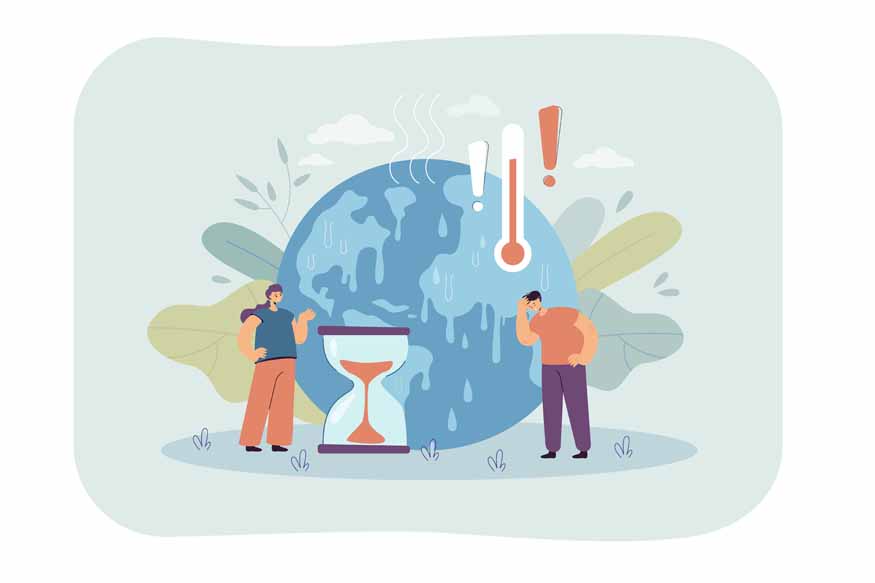
It describes long-term shifts in Earth’s temperature, precipitation, and weather patterns that take place over decades; it is not a single dry season or a cold winter, but rather measurable changes in the planet’s behaviour over a long period of time. Although the Earth’s climate has always changed naturally, the rate at which it is currently changing makes it a concern that demands detailed investigation.
What Makes Climate Different from Weather?
The current weather conditions are sunny, windy, rainy, and subject to change in a matter of hours. The pattern that appears when you examine the weather in the same location over several years is called the climate. The difference is essential because one cool day or an abnormally wet season might lead to misconceptions about climate change. The first step in understanding what scientists are truly studying and why it matters to them is realising that it is related to long-term shifts rather than daily situations.
How Earth’s Climate Has Changed Over Time?
Earth’s climate has never been static. Ice ages, warmer periods, volcanic eruptions and shifts in the planet’s orbit have all reshaped conditions over millions of years. Climate change explained in its simplest form comes down to this — those natural shifts happened gradually, over thousands or millions of years, while what’s being observed today is happening within decades. The current scenario is unlike anything in recorded history because of this variation in pace.
When Does Climate Change Become a Concern?
Some climate variation is natural. It becomes a concern when temperatures keep rising, rainfall grows unpredictable and extreme weather becomes more frequent over time. These shifts affect farming, water supplies and wildlife in ways that reach everyday life. At CBSE Schools in Nagpur, learning about these changes helps students develop environmental awareness from an early age.
What Causes the Earth’s Climate to Change?
Climate has always been shaped by natural forces — volcanic eruptions, solar shifts and changes in the Earth’s orbit. What’s different now is the pace. Burning fossil fuels, clearing forests and industrial activity release gases that trap heat in the atmosphere, and these are the major causes of climate change driving the rapid warming scientists are measuring today. Understanding this connection helps students see that everyday choices are part of a much larger picture.
The Science Behind Climate Change
A layer of gases surrounding the Earth naturally traps some of the Sun’s heat — enough to keep the planet liveable, not so much that it overheats. This balance is the greenhouse effect, and for most of history it has held steady. The issue today is that human activity is adding heat-trapping gases faster than the atmosphere can absorb them, tipping that balance. Global warming for students begins here — understanding that a natural and necessary process has been pushed beyond what the planet can comfortably manage.
How Scientists Study Climate Change?
Understanding climate change requires looking both at the present and deep into the past. Scientists measure temperatures, track rainfall, monitor oceans and use satellites to observe the Earth in real time. By studying ice cores, tree rings and fossils, scientists can learn how the Earth’s climate has changed over long periods of time. This combination of current data and historical evidence is what allows reliable predictions to be made. At the time of CBSE School Admission in Nagpur, schools commonly discuss how they encourage exploration of science through class debates and experiential learning.
Common Misunderstandings About Climate Change
A single cold day is often used to dismiss climate change — but climate is measured across decades, not single weather events. This misunderstanding is common and worth correcting. So is the belief that climate change only affects distant places. Shifting seasons, unpredictable rainfall and rising temperatures are already reaching communities everywhere. Getting information from reliable sources rather than assumptions is what separates a clear understanding of this topic from a convenient one.
Why Climate Change Is a Global Issue?
The atmosphere doesn’t follow borders. Pollution released in one country moves through air currents and ocean patterns until its effects are felt far beyond where it started. This is what makes climate change a shared responsibility rather than someone else’s problem. Environmental studies that help students understand these global connections give them a framework for thinking about sustainable living that goes beyond their own surroundings.
Why Everyone Should Understand Climate Change?
What children learn about the environment today shapes the decisions they make tomorrow. If you visit CBSE schools in Amravati Road, you’ll notice that environmental awareness isn’t treated as a separate subject — it runs through everyday learning in ways that help students connect what they study to the world they’re growing up in. Visit to learn more about the Science Behind Climate Change
FAQs
1. What is climate change?
Long-term shifts in the Earth’s temperature and weather patterns that develop over decades, not days.
2. What causes climate change?
Both natural events and human activity — burning fossil fuels and clearing forests being the most significant.
3. Is climate change the same as weather?
No. Weather is what’s happening today. Climate is the pattern that emerges over many years.
4. Why should students learn about climate change?
It’s already shaping the world they’re growing up in. Understanding it leads to better choices.
5. Can individuals make a difference?
Yes — saving energy, reducing waste and planting trees all contribute when practised consistently.
Conclusion
Climate change is not a weather event — it’s a long-term shift in how the planet behaves, driven today largely by human activity at a pace that has no natural comparison. Scientists piece this together through decades of evidence, from temperature records to ice cores, building a picture that is clear even when individual data points are complicated. Students who understand the facts behind these changes rather than relying on assumptions are better placed to make sense of the world they’re inheriting — and to play a genuine role in how it’s looked after.
Centre Point School, one of the trusted CBSE schools in Amravati Road, believes that students who understand the world around them learn with more purpose. Environmental awareness, including topics like climate change, is part of how learning happens here every day. Enquire Now to explore our learning environment.